

In short
A wet dust collector mixes the dusty air drawn from a machine with water and holds the particles in the water. Because it uses water instead of filter bags, sticky or clumping dust does not clog it.
According to Urca’s product page the system captures particles with 98% to 99% efficiency and comes in eight capacities from 2000 to 12000 m³/h.
In this article
What is a wet dust collector?
Collectors come in two main types: dry filters (bag or cartridge) and wet collectors that catch the dust in water.
According to its product page, Urca’s wet dust collector is a self-cleaning industrial wet collector. The page says it suits soluble and insoluble powders, dusts and fines.

How does a wet dust collector work?

Following the product page, the process comes down to four steps:
How the process works
- Mixing: dusty air meets water through a fixed dual opposing blade system, and a vortex forms.
- Turbulence: a tangential air stream injected through the lower blade assembly increases turbulence and helps the dust pass into the water.
- Droplet separation: remaining water droplets are caught by a demister at the outlet.
- Collection: particles settle at the bottom of the unit, where they are recovered or disposed of.
The system uses little water and needs only a small amount of added water. According to the product page, energy generated inside the unit keeps the system from clogging.
Dry filter or wet dust collector?
The choice depends on the type and amount of dust and on conditions in the plant.
Dry filter vs wet dust collector comparison
| Topic | Dry filter (bag or cartridge) | Wet dust collector |
|---|---|---|
| What holds the dust | Filter bag or cartridge | Water |
| Sticky or clumping dust | Can clog the filter and needs frequent cleaning | According to the product page, no clogging problem |
| Collected waste | Dry dust | Wet sludge, emptied regularly |
| Upkeep | Filter change and cleaning | Water level, sludge emptying |
The dust itself usually decides. For metal dust, choose the collector together with the plant’s occupational safety assessment.
What safety points matter with metal dust?
Worth knowing
Fine dust from some metals, aluminium for example, is combustible. Choose a wet collector together with Urca’s technical team and your plant’s safety specialist.
Points from the Aluminum Association guide
The Aluminum Association guide to safe handling of fine aluminum particles recommends the following:
- A system that collects aluminum dust should be dedicated to it and not shared with dust from other metals.
- The machine, the ducting and the collector should be grounded against static electricity.
- Because aluminum and water can produce hydrogen, wet collectors should be vented and the sludge emptied at least once a day.
- Interlocks should stop the machine if there is no water or the extraction is not running.
The guide also recommends high-efficiency wet collectors for aluminum (at least 99.5%). The Urca product page states 98% to 99%.
If requested, the Urca wet dust collector can be built for aluminum and other combustible metal dust applications.
How do you size a wet dust collector?
According to the product page, the Urca wet dust collector comes in capacities of 2000, 3000, 4000, 5000, 6000, 8000, 10000 and 12000 m³/h.
Every machine has a different number and size of extraction ports. Examples from the product pages:
Example machine extraction ports
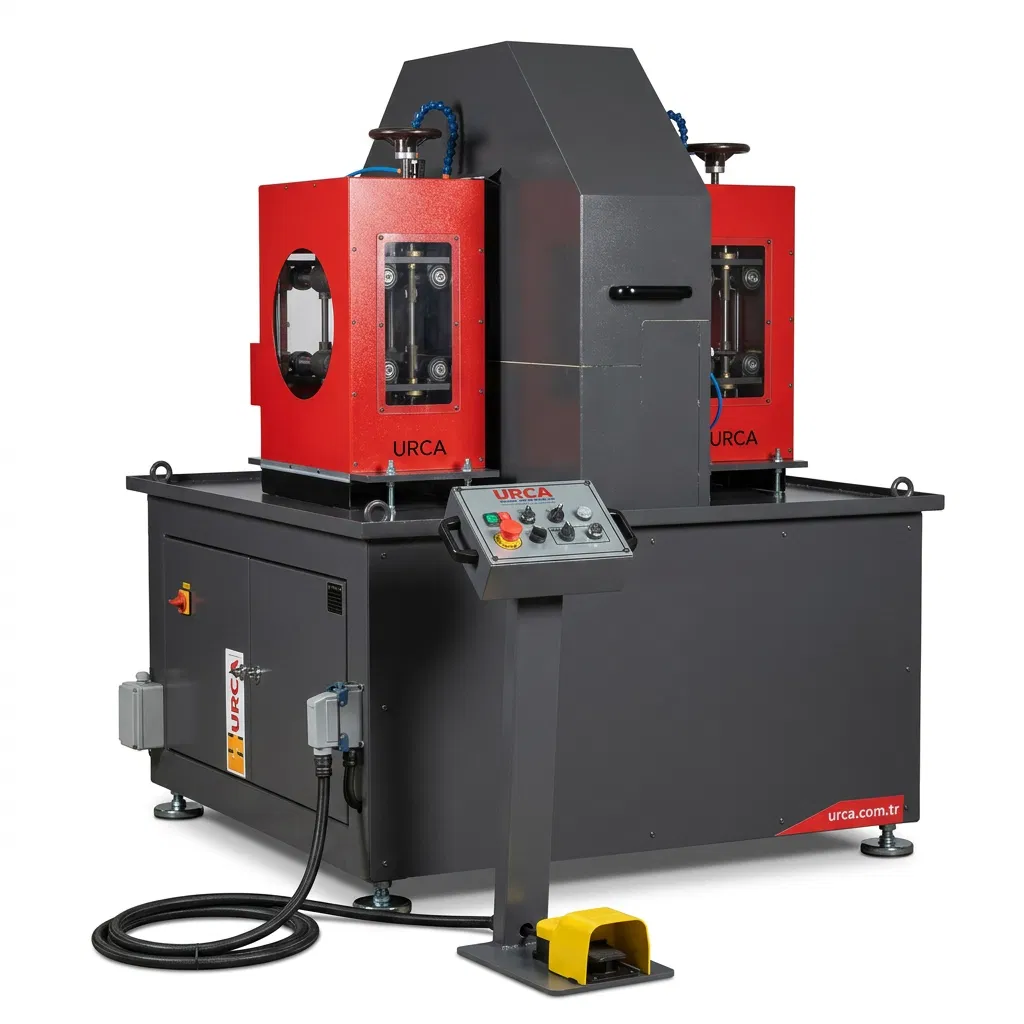
- QB1350 4-disc deburring and edge rounding machine: one Ø200 mm port
- OP110 pipe polishing machine: Ø60 mm dust outlet
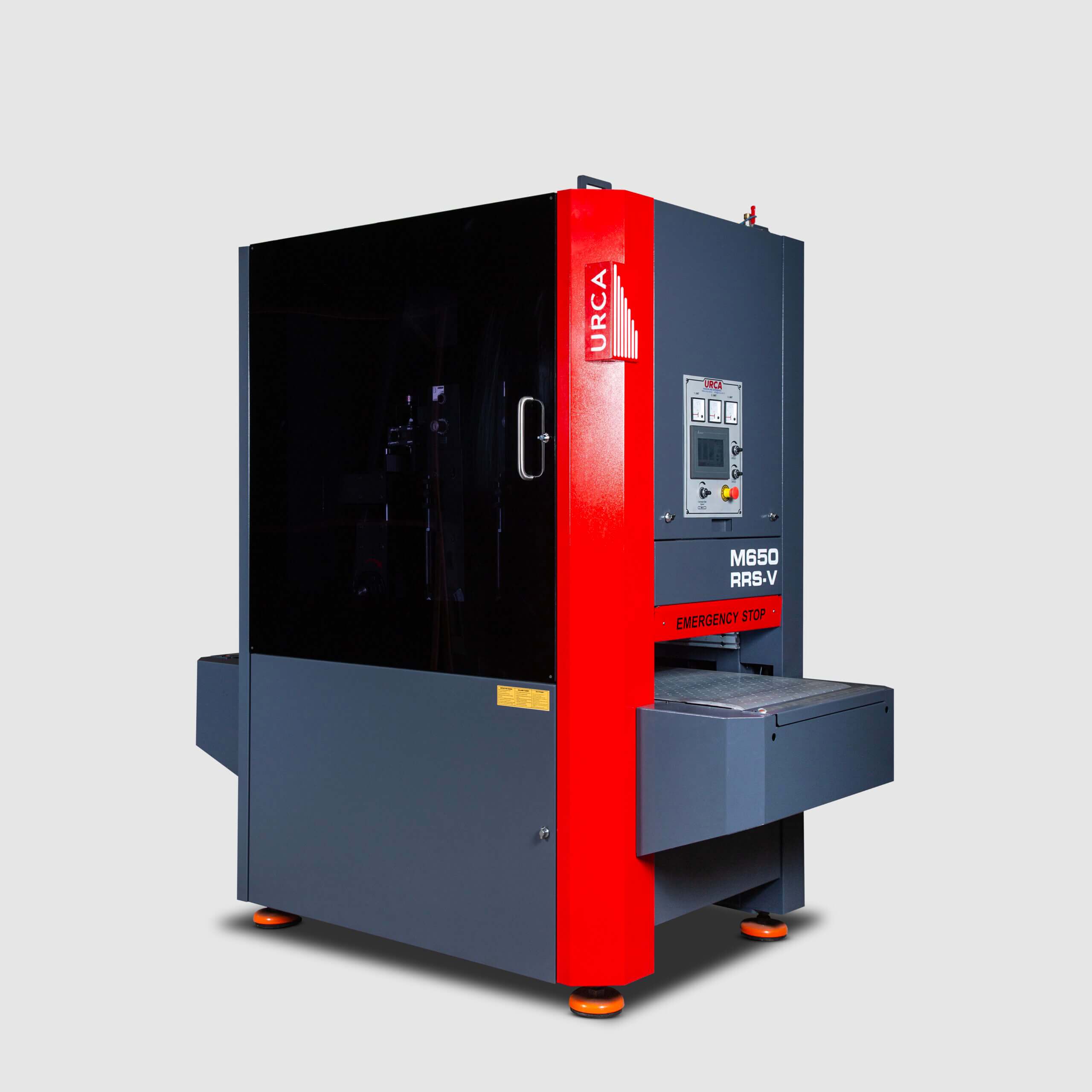
- M650 RRS-V metal sanding machine: 3 × Ø125 mm dust outlets
The total cross-section of these ports and the duct route set the airflow the collector needs. A unit sized for one machine may fall short when a second is added; include machines you plan to add soon.
Long ducts with many bends weaken the suction. If several machines connect to one collector, count how many will run at once.
What should you watch for in installation and upkeep?
Installation and upkeep points
- Watch the water level: top up water lost to evaporation and sludge.
- Empty the sludge regularly: built-up sludge cuts performance. For metal dust, follow the safety plan.
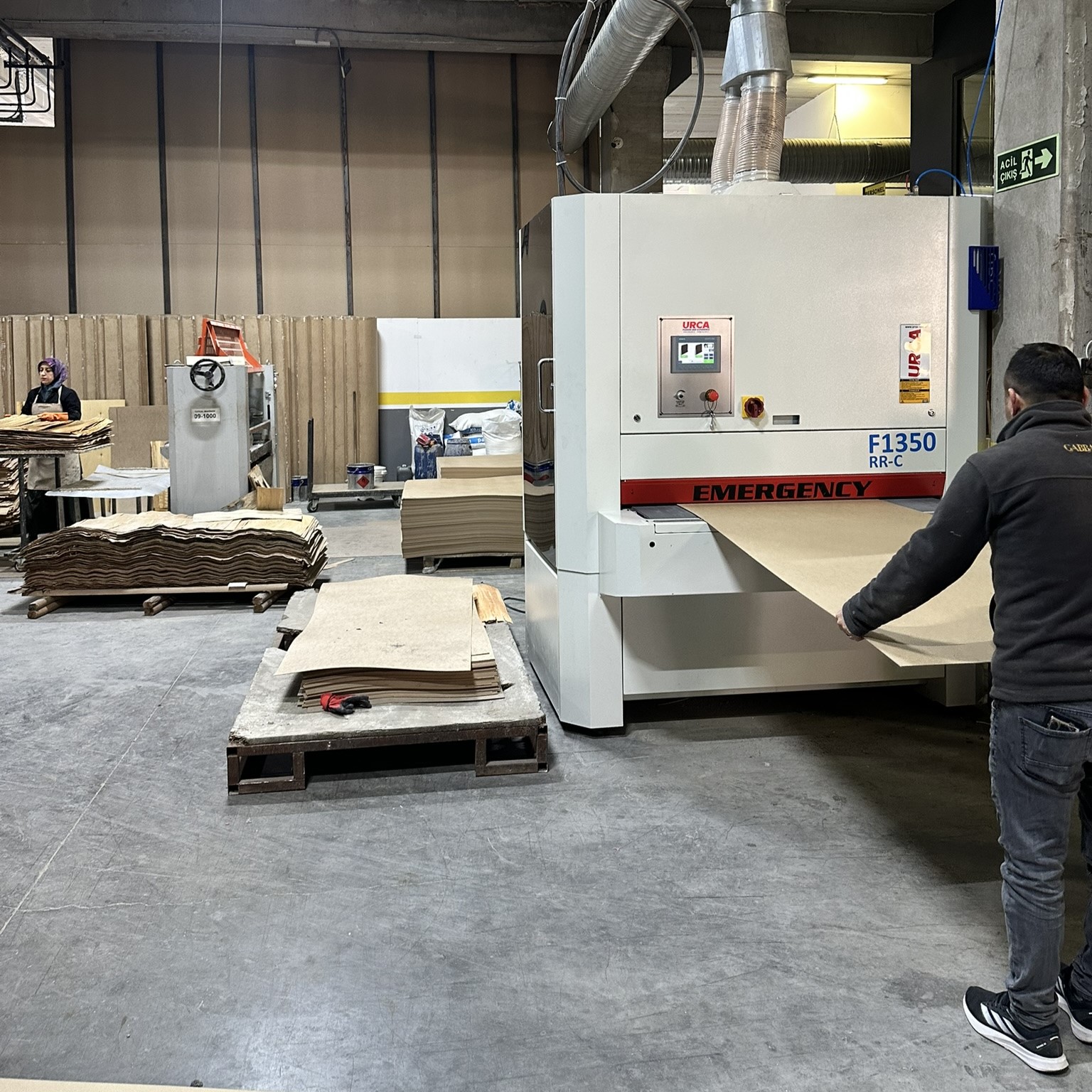
- Keep the extraction port clean: if it clogs, dust stays on the surface and belts or discs load up faster.
- Keep dry and wet processes distinct: dust from a dry sander can go to a wet collector. Wet working (a cool finish) inside the machine is a separate matter.
For upkeep and setup help after installation, see our service and technical support page. We explain the difference between dry and wet working in our post on dry vs wet tube polishing.
What to prepare before asking for a quote
What to prepare for a quote
- Dust source: which machine and which material (stainless, carbon steel, aluminum, wood, etc.)
- Number of machines to connect and the extraction port of each
- Where the collector will be placed and the duct length
- Any existing extraction system and the problems you have had
All models are in the wet dust collectors and filters category.
Frequently asked questions
What does a wet dust collector do?
It mixes the dusty air drawn from the machine with water and holds the particles in the water. The cleaned air leaves through the outlet and the dust settles at the bottom of the unit as sludge.
Does a wet dust collector need filters?
The medium that catches the dust is water, so no filter bags are used. A demister at the outlet catches water droplets.
What capacities does the Urca wet dust collector come in?
According to the product page, 2000, 3000, 4000, 5000, 6000, 8000, 10000 and 12000 m³/h.
Can a wet dust collector be used for aluminum dust?
Aluminum dust is combustible and needs special precautions. If requested, the Urca wet dust collector can be built for this application. Plant safety measures should still be planned with a health and safety specialist.
Is a wet dust collector the same as a cool finish?
No. A wet dust collector captures the dust in the air. A cool finish means using water inside the machine during sanding or polishing.
Let us work out the dust extraction capacity for your line
Send the machines to be connected, the extraction port of each and the duct length. Phone: +90 224 362 06 47.