

In short
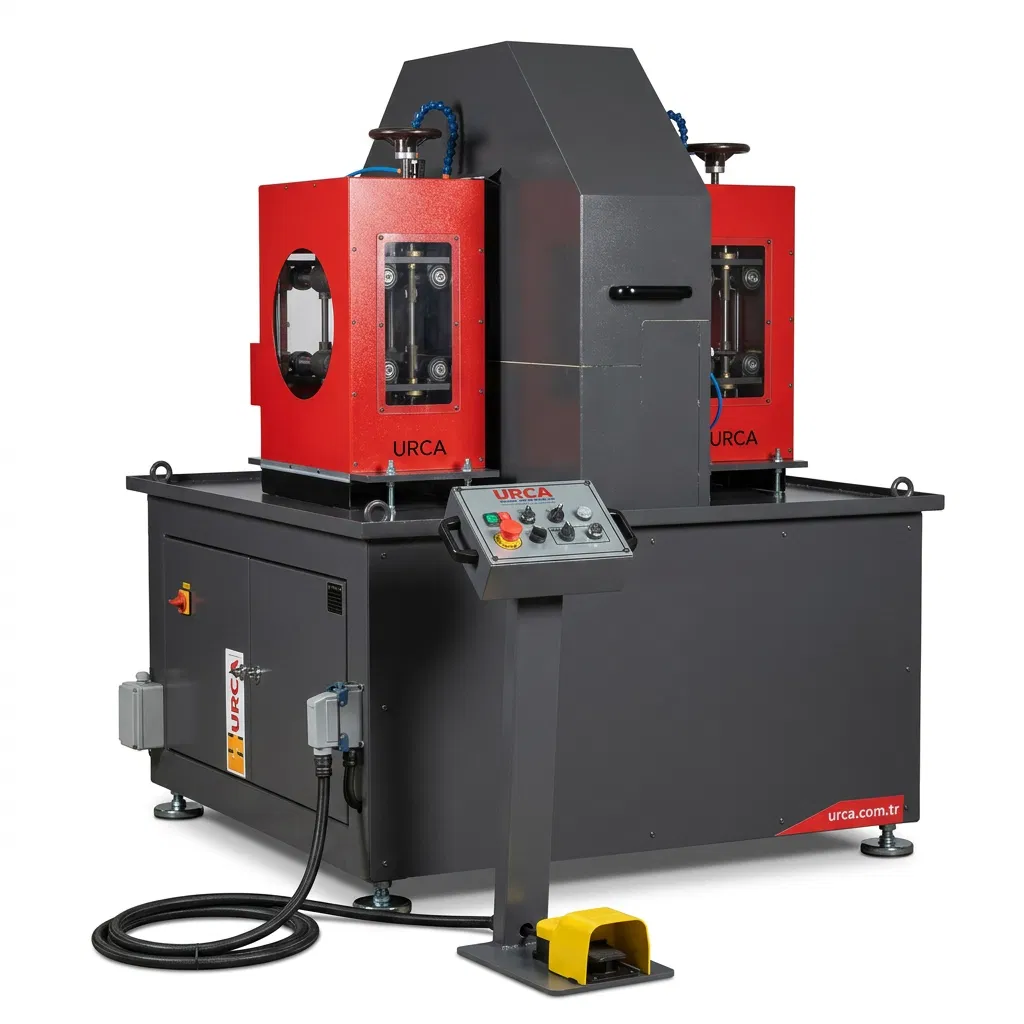
A calibration sanding machine (also called a wide belt sanding machine) feeds a panel under a wide abrasive belt and removes a controlled amount of material, leaving even thickness and a surface ready for paint or veneer.
When choosing one, start with the material and the widest panel, then decide whether you need thickness removal, fine finishing, or both.
In this article
What does a calibration sanding machine do?
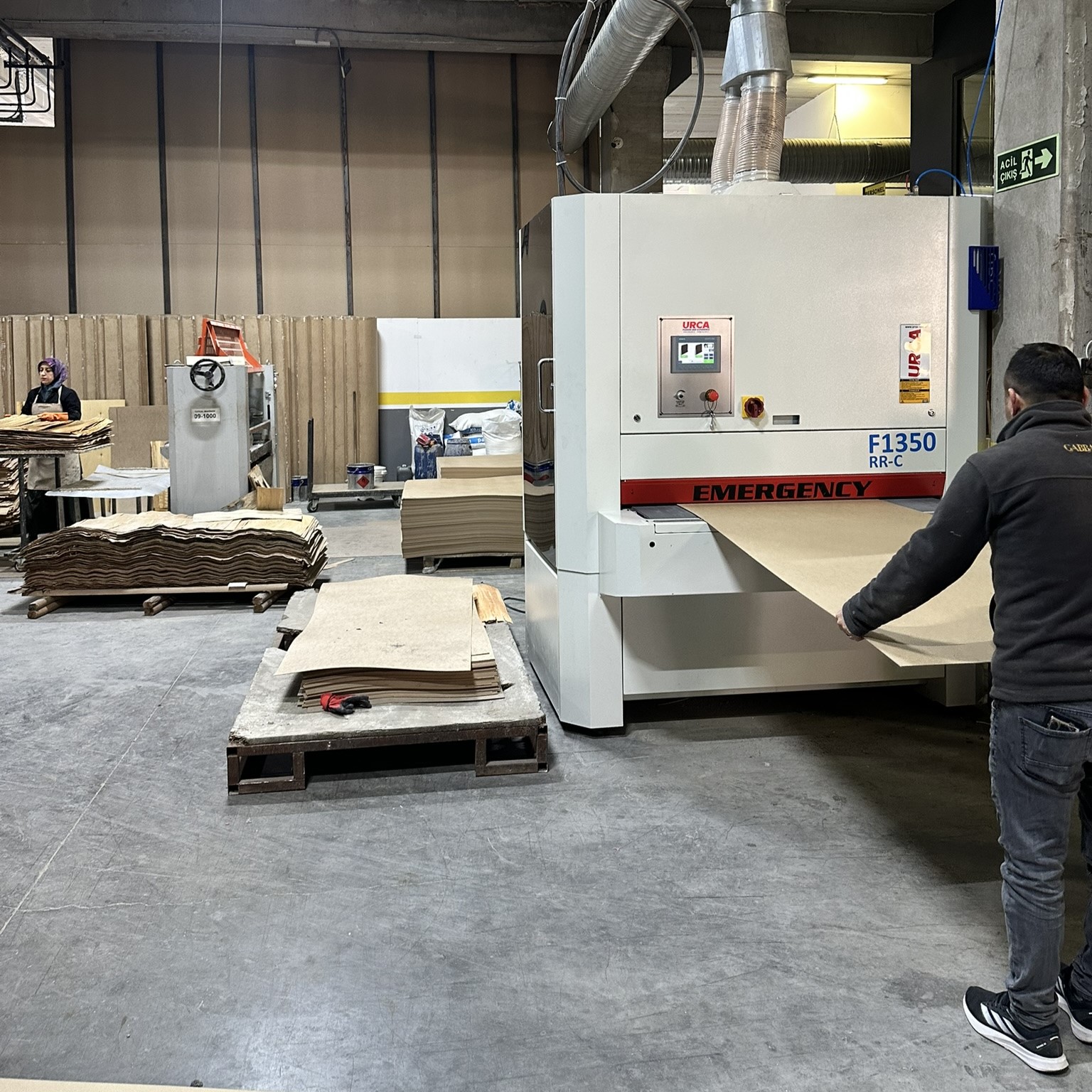
The aim is to even out thickness differences and prepare the surface for paint, lacquer or veneer.
What questions should you ask when choosing a calibration sanding machine?
1. Which material will you process?
Solid wood, MDF, veneered panel and paper foil do not behave the same way. On solid wood and raw MDF, thickness removal comes first; on thin veneered surfaces you need to finish without sanding through the veneer.
Materials listed on the product pages
According to its product page, Urca’s F1350 RR-C calibration sanding machine works on paper foil, veneer, MDF, natural wood and other wood-based materials. The F2250 CP combination sanding and calibration machine is designed for veneered MDF, MDF, natural wood and solid panels; the page also lists foil, PVC and melamine surfaces, plywood and parquet.
2. How wide is your widest panel?
Working width is the widest part that can enter the machine. The F1350 RR-C is 1350 mm, the F2250 CP is 2250 mm, and the F300 RK is 300 mm for narrow parts.
Working widths and the F300 RK
Working width is the widest part that can enter the machine; include jobs you may take on soon. The F1350 RR-C has a 1350 mm working width. The F2250 CP has a 2250 mm working width. For narrow parts (chair and table parts, slats, profiles), the F300 RK has a 300 mm working width, with a roll drum at the front, a pad at the back, and a pneumatic switch between them.
You can contact Urca for non-standard sizes and different unit configurations. If your panel size falls between two models, or you are building a wider line, state the size clearly in your quote request.
3. Do you need thickness removal or finishing?
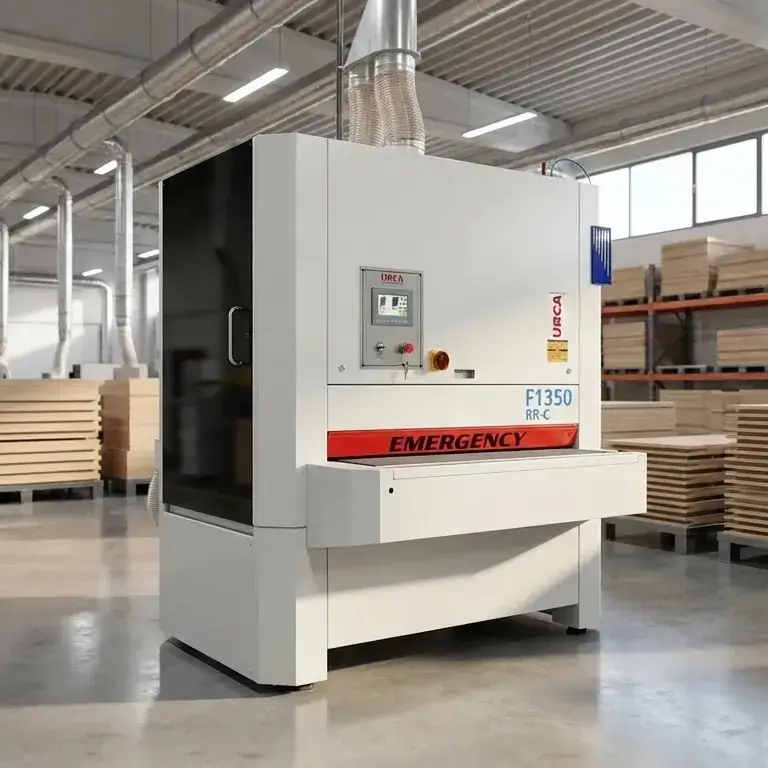
A steel drum removes more material; a rubber drum leaves a smoother surface.
Steel and rubber drums on the F1350 RR-C
A steel drum makes hard contact and removes more material, so it is used to flatten the panel. A rubber drum works more softly and leaves a smoother surface. On the F1350 RR-C the first unit is a steel drum and the second a rubber drum, so the panel is calibrated and then finish sanded in one pass.
4. Do you need a pad system on veneered surfaces?
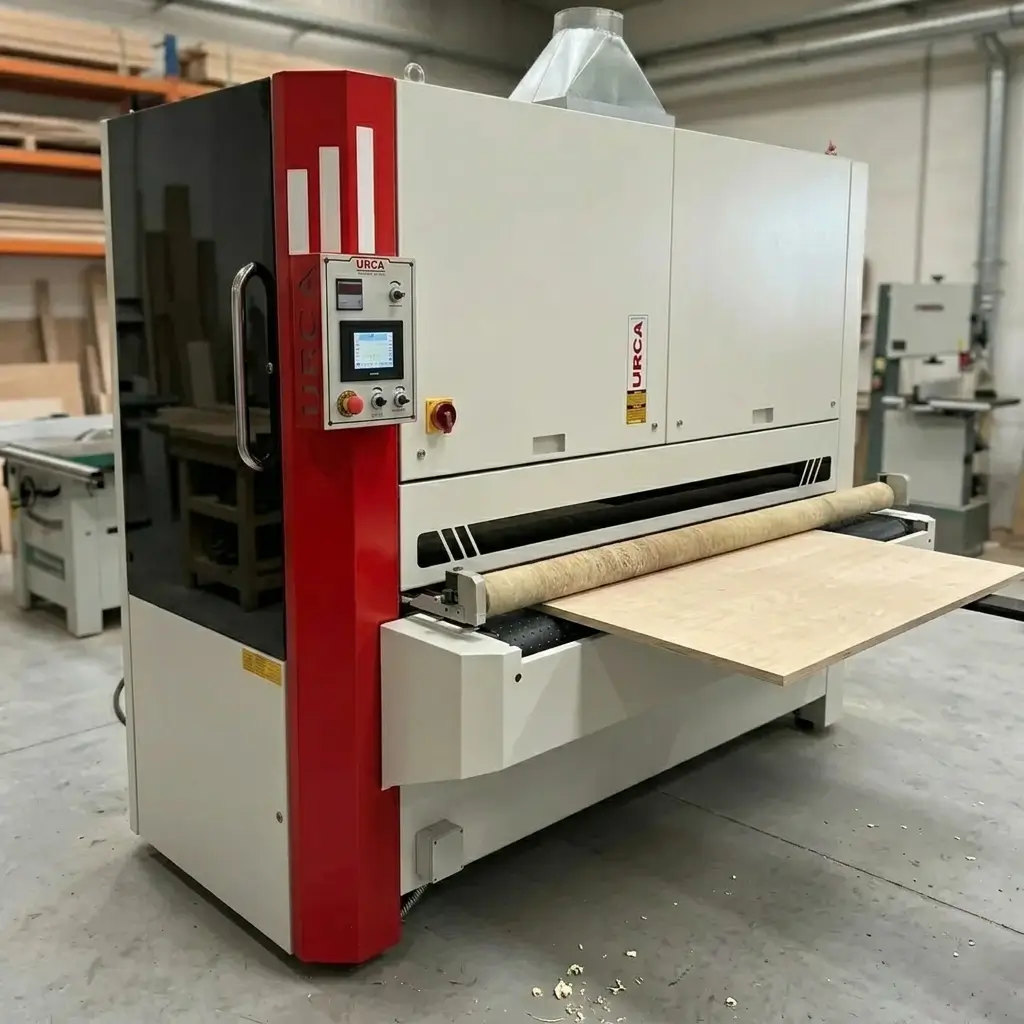
On thin veneer or slightly uneven panels a fixed drum can sand through the veneer at high spots and cut into the edge. A pad system (segmented pad) reduces that risk with many small pressure elements that adapt to the surface. On the F2250 CP, according to the product page:
F2250 CP pad system values
- There are 36 independent pad segments and a Ø250 mm rubber-coated roller.
- 36 sensors at the entry detect the part’s entry, exit and right and left edges, which prevents edge dubbing.
- The operator can switch off the outermost segments, or turn the pad system off and calibrate on the roller alone.
5. Will you process thin material?
Thin panels can slip and vibrate under the belt. The F1350 RR-C has a standard vacuum system that stabilises material of 2 mm and below.
6. What is your daily capacity?
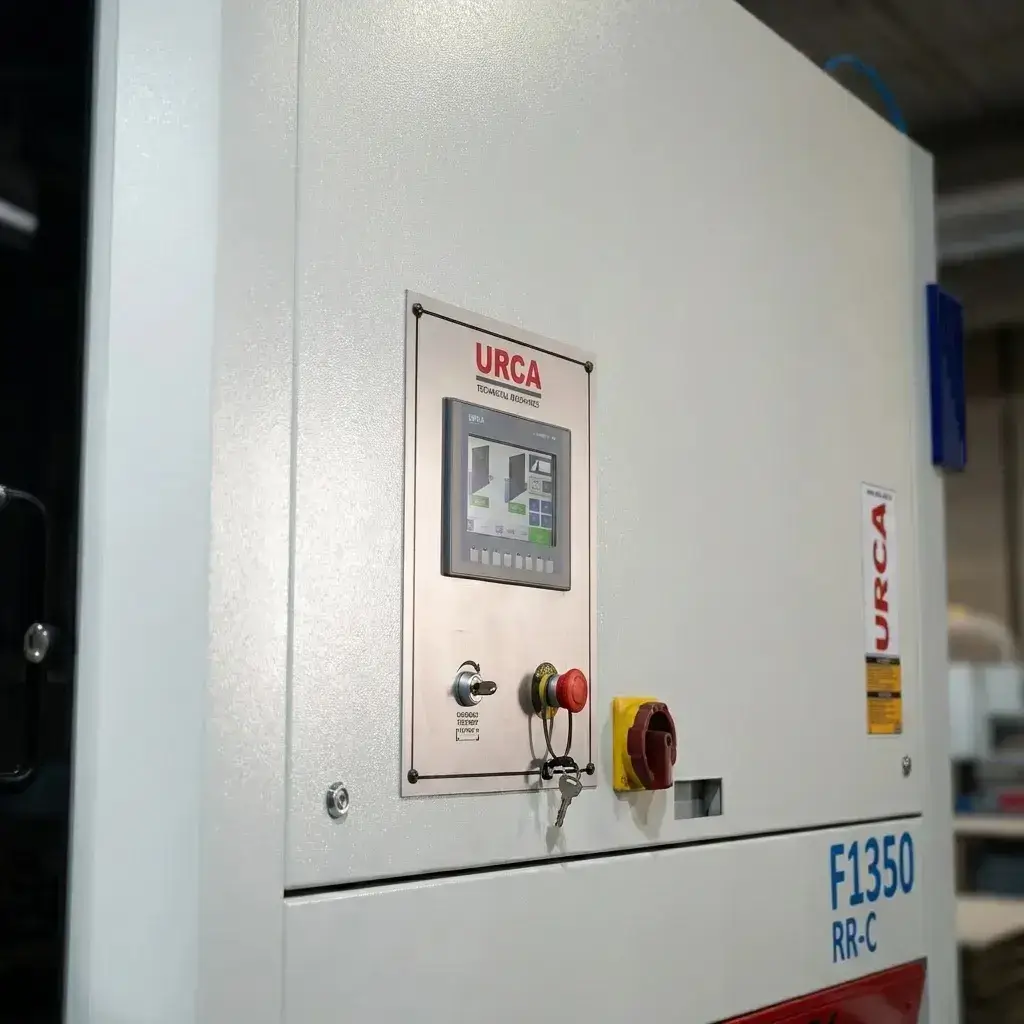
Capacity depends on feed speed and motor power.
F1350 RR-C and F2250 CP capacity values
On the F1350 RR-C, feed is adjustable from 3 to 12 m/min, total motor power is 33 kW and abrasive cutting speed is 18 m/s. The F2250 CP has a 30 kW inverter-controlled motor.
7. Is your dust extraction ready?
A calibration sander produces a lot of dust; the outlets must suit the plant extraction line. The F1350 RR-C has 2 dust outlets of Ø200 mm. Weak extraction hurts both surface quality and belt life.
Which machine suits profiled and shaped surfaces?

Calibration sanding is for flat panels. For profiled doors, carved surfaces or slight form differences, flexible brush machines fit better. According to its product page, Urca’s Flexi 2000 has a 2000 mm net working capacity and is used on flat, profiled or slightly uneven parts for preparation, intermediate sanding and final sanding.
How do Urca’s calibration and finishing machines compare?
Calibration and finishing machine comparison
| Model | Highlights | Product page |
|---|---|---|
| F1350 RR-C | 1350 mm; steel drum + rubber drum; 3 – 12 m/min feed | F1350 RR-C |
| F2250 CP | 2250 mm; Ø250 mm rubber roller + 36 segment pad system; 36 sensors | F2250 CP |
| F300 RK | 300 mm; front roll drum + rear pad; pneumatic switch between them | F300 RK |
| Flexi 2000 | Flexible brush, oscillation, 2000 mm net working capacity | Flexi 2000 |
You can find all models in the calibration and finishing machine category, and every wood product on the wood machines page.
 Calibration and Finishing MachineF1350 RR-C Calibration Sanding Machine→ VIEW MACHINECalibration and Finishing MachineCombination Sanding and Calibration Machine (Pad + Roller System) – F2250 CP→ VIEW MACHINECalibration and Finishing MachineF300 RK Drum & Pad Combination Sanding Machine→ VIEW MACHINEFlexiable Brush Sanding MachineFlexi 2000 Flexible Brush Oscillating Wood Sanding Machine→ VIEW MACHINE
What to prepare before asking for a quote
What to prepare for a quote
- Material and surface (solid, MDF, veneered, paper foil, laminated)
- Widest panel size, thickness range and shortest part length
- Goal: thickness removal, intermediate sanding or final finish
- Daily production volume
- Current dust extraction capacity
For upkeep and process settings after installation, see our service and technical support page.
Frequently asked questions
What is the difference between a calibration sanding machine and a wide belt sander?
The terms are used for the same kind of machine: a wide belt machine that removes a controlled amount of material from the panel surface, evens out thickness and prepares the surface for finishing.
What is the difference between a steel drum and a rubber drum?
A steel drum makes hard contact, removes more material and is used for calibration. A rubber drum is elastic and gives a finer, smoother finish.
What does a pad system do?
Independently working segments adapt to the surface one by one. On veneered panels they reduce the risk of sanding through the veneer and of dubbing at the edge.
Which materials does the F1350 RR-C work with?
According to the product page, paper foil, veneer, MDF, natural wood and other wood-based materials.
Can profiled doors be processed on a calibration sander?
Calibration sanding is for flat panels. For profiled and shaped surfaces, flexible brush machines such as the Flexi 2000 fit better.
Let us choose the right model for your panels together
Send the material, the widest panel size, the thickness range and the daily volume. Phone: +90 224 362 06 47.