

In short
In dry working the abrasive belt touches the tube without water and dust is removed by extraction. In wet working (a cool finish) water is fed to the work zone, where it takes away heat and holds the dust.
For small and medium tubes dry working is often enough. For large diameters, heat-sensitive surfaces or dust problems, wet working is the better starting point.
In this article
- How does dry tube polishing work?
- How does wet working (a cool finish) work?
- What is the difference between dry and wet working?
- Should you choose dry or wet?
- When is a dry machine with a wet option enough?
- How do you reduce heat discolouration on stainless?
- What are the OPW350 product page values?
- What to prepare before asking for a quote
- Frequently asked questions
How does dry tube polishing work?
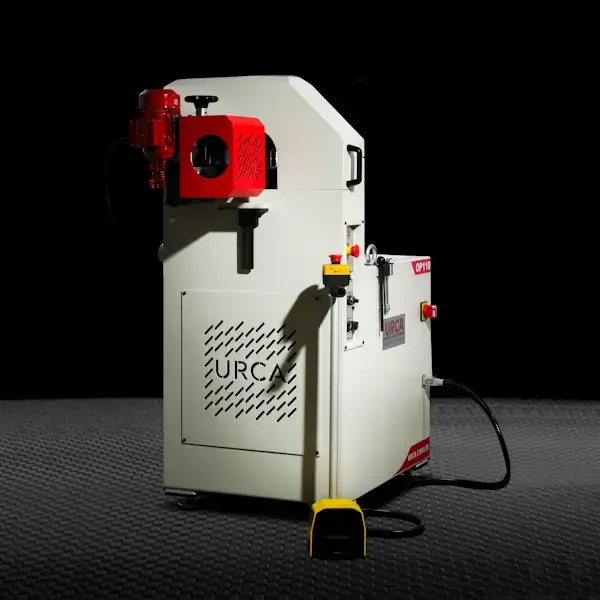
Dust is drawn off through the machine’s dust extraction connection. Urca’s OP110 pipe polishing machine is designed for dry working; according to the product page wet working is available as an option.
The OP110 has a Ø60 mm dust outlet. The three-unit OP110-3 has three Ø60 mm dust outlets (3×Ø60).
Points to watch in dry working
- Setup is simple: there is no water circuit, filter or sludge to manage.
- The area stays dry and parts need no drying after processing.
- It is practical on small and medium tubes and on non-series work.
- Heat: friction heats the surface. Slow feed and high pressure can discolour stainless.
- Dust: never run without effective dust extraction. Aluminium dust needs separate attention.
- Belt life: a belt that heats up can dull faster.
How does wet working (a cool finish) work?
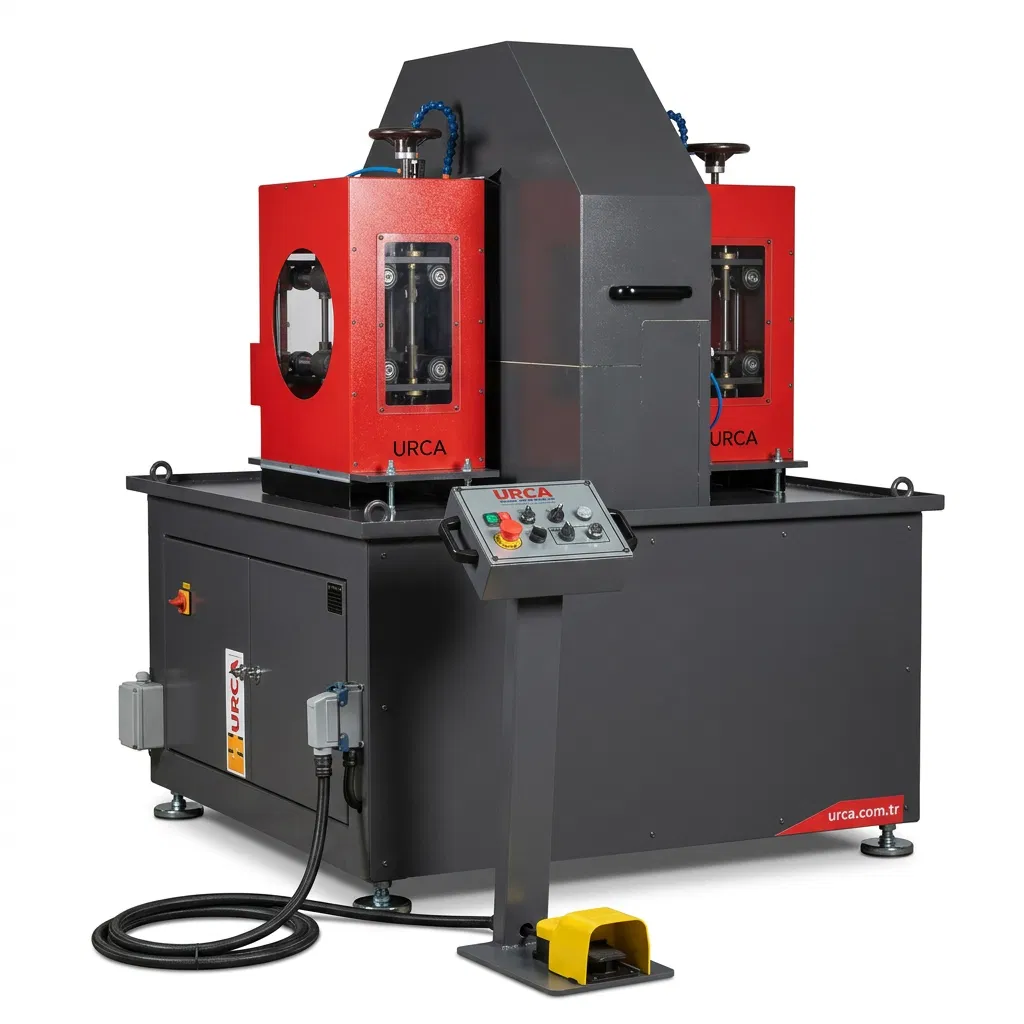
Urca’s OPW350 wet orbital pipe polishing machine works on this principle: water is fed to the contact zone, takes away friction heat and holds the dust.
Advantages of wet working
- Heat control: the surface stays cool, which makes long runs easier on large diameters.
- Dust control: dust is held in the water instead of spreading into the air.
- A consistent surface: according to the product page, the OPW350 wet orbital system and self-centering feed give an even finish.
- The water circuit, filter and sludge need regular cleaning.
- Dry tubes after processing; do not leave corrosion-prone materials wet.
- Check water and electrical safety around the machine regularly.
What is the difference between dry and wet working?
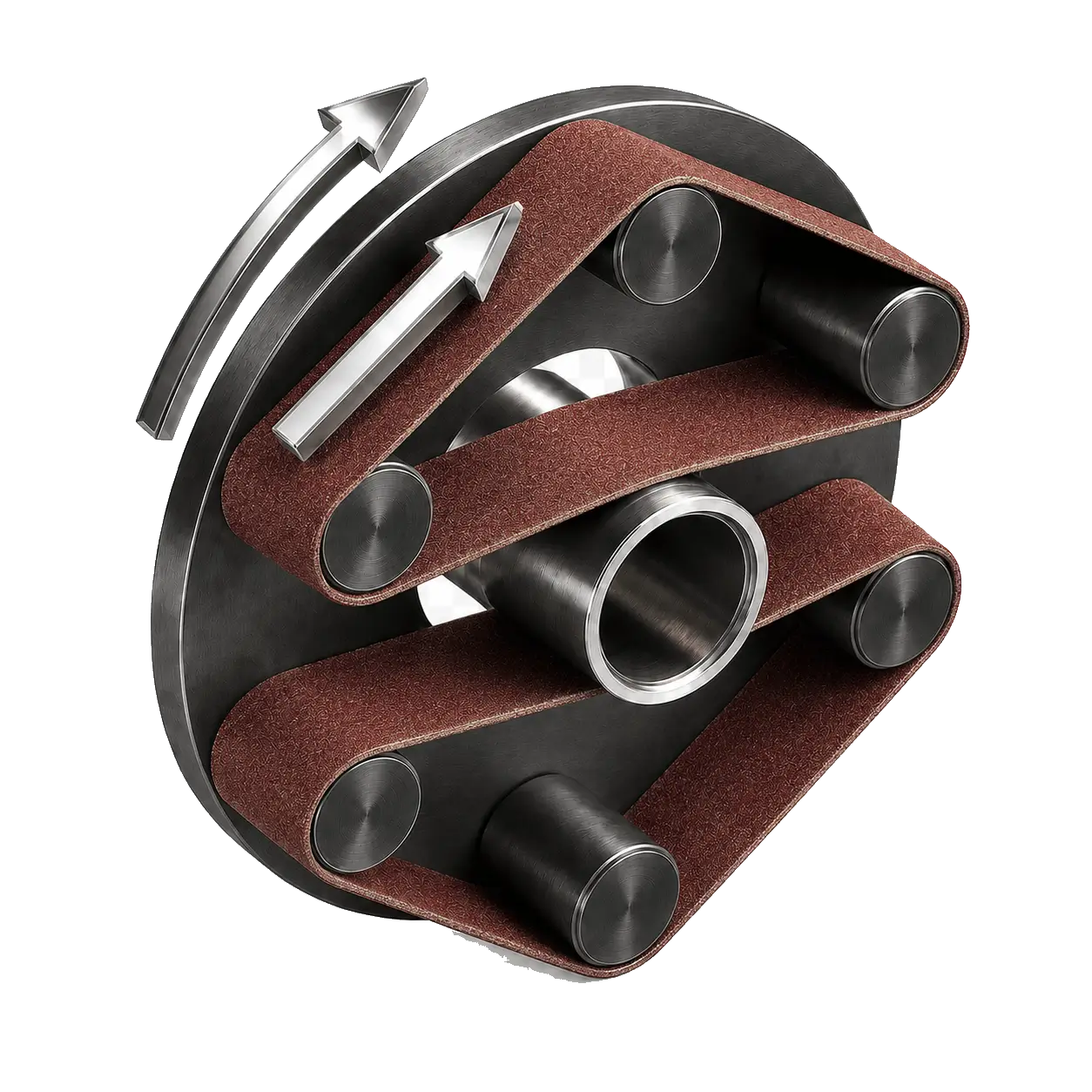
The table compares the two methods on heat, dust, setup and upkeep. Diameter ranges come from the product pages.
Dry vs wet working comparison
| Topic | Dry working | Wet working (cool finish) |
|---|---|---|
| Heat | Can rise with feed and pressure | Kept under control by water |
| Dust | Dust extraction is essential | Held by water |
| Setup | Simpler | Needs a water circuit and filter |
| Upkeep | Dust filter and extraction line | Water, filter and sludge cleaning |
| Urca model | OP110, OP110-3 (wet optional) | OPW350 |
| Diameter range (product page) | Up to Ø114 mm | Ø55 – Ø355 mm |
 Pipe Polishing MachinesOP110 Pipe Polishing Machine→ VIEW MACHINEMetal MachinesWet Orbital Pipe Polishing Machine OPW350 | Straight Tubes→ VIEW MACHINE
Should you choose dry or wet?
Up to Ø114 mm the OP110 family works dry and can be equipped for wet working if needed. Above Ø114 mm the OPW350 comes in, for straight and tapered tubes from Ø55 to Ø355 mm.
Urca tube machine product pages list stainless steel, carbon steel, aluminium, brass, bronze and copper. The OPW350 page adds composite tubes. For heat-sensitive materials or higher-risk dust, wet working is the safer place to start.
The OP110 can run with manual or automatic feed. The OPW350 comes with an automatic feed system. On long, heavy tubes a steady feed helps the surface look the same at every point.
Wet working needs a water circuit and waste handling; dry working needs a strong dust extraction line. What is already in the plant, or can be installed, affects the choice directly.
When is a dry machine with a wet option enough?
Not every job needs a separate wet machine. The OP110-3 product page lists wet working, cooling fans and extra carrier rollers as options. For a shop that mostly runs dry but sometimes takes heat-sensitive work, try the options you need on a sample.
How do you reduce heat discolouration on stainless?
Yellow or blue tints on stainless tube show that the surface overheated. When working dry, do not use more pressure than needed and do not make up for a dull belt with pressure; set the feed so the belt does not stay on one spot; and replace a dulling belt on time. If that is not enough, or the problem grows with diameter, switching to wet working is the most direct route.
What are the OPW350 product page values?
OPW350 product page values
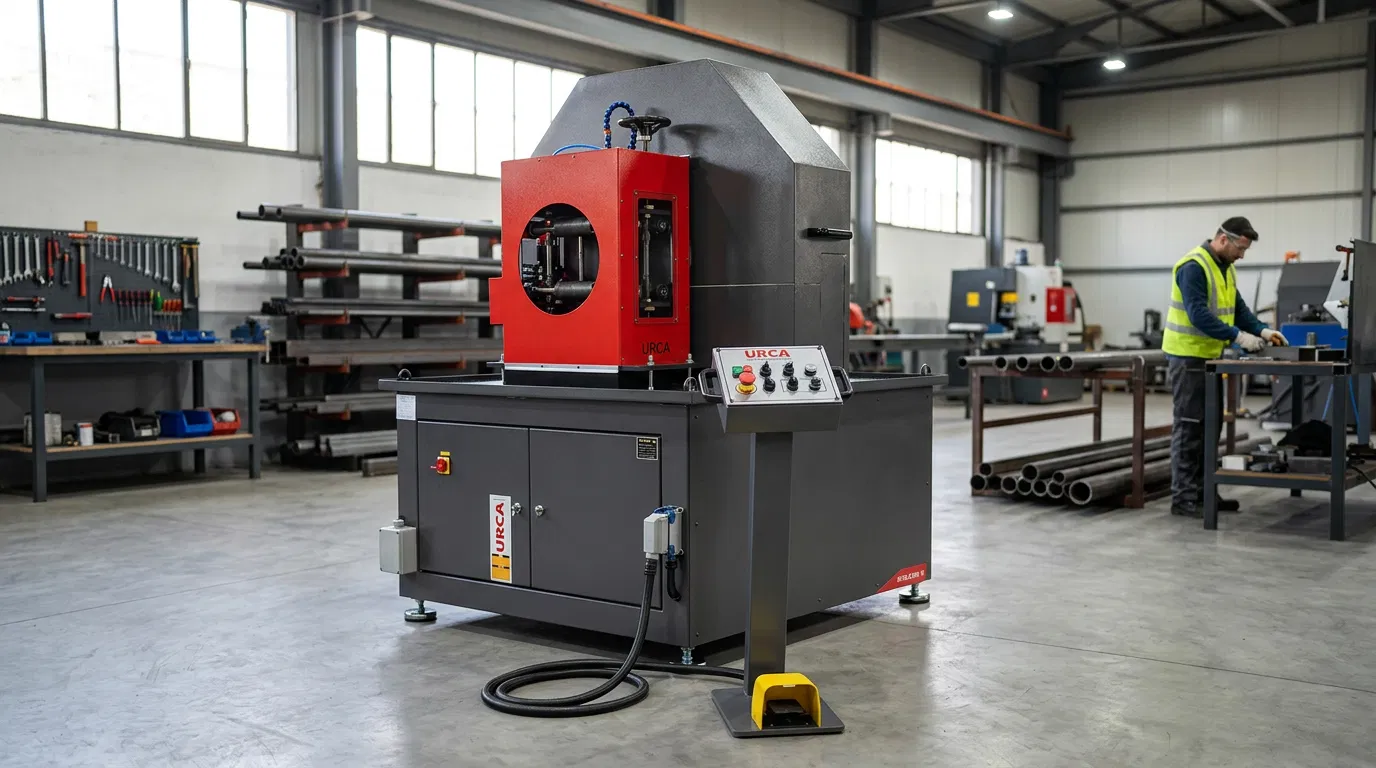
Values published on the product page: a working range of Ø55 – Ø355 mm, 25 kW total motor power, a 2300×120 mm abrasive belt, adjustable abrasive pressure and speed, and an inverter-controlled self-centring automatic feed. It suits straight and tapered tubes with round, oval and elliptical sections.
Applications listed on the page include large diameter tube production, stainless fabrication, architectural metalwork and automotive parts.
What to prepare before asking for a quote
What to prepare for a quote
- Tube material and diameter range
- Section (round, oval, elliptical), straight or tapered
- Tube length and weight
- The surface you need (satin, polish)
- Whether the plant has a water circuit or a dust extraction line
- Daily volume
We explain the steps of the satin process in our post on satin finish on stainless steel tube.
Frequently asked questions
What is a cool finish?
It is sanding and polishing done with water fed to the contact zone. The water takes away heat and holds the dust, so the surface stays cool and dust does not become airborne.
When is dry tube polishing enough?
On small and medium tubes, with effective dust extraction in the plant and no heat-sensitive surface involved, dry working is often enough.
Can the OP110 work wet?
The OP110 and OP110-3 product pages list wet working as an option. Standard operation is dry.
Which diameters does the OPW350 work with?
According to the product page, the OPW350 processes straight and tapered tubes from Ø55 to Ø355 mm, working wet.
Is wet working hard to maintain?
The water circuit, filter and accumulated sludge need regular cleaning. It takes the place of dust filter maintenance in dry working, and it is routine once scheduled.
Let us find which method fits your tube
Send the tube material, diameter range and the water or dust extraction setup in your plant. Phone: +90 224 362 06 47.